All posts by canicus

Canicus in Italia: Day 6 (5 July 2012)

Originally posted on July 5, 2012 by Canicus

Stabiae

The route of Circumvesuviana seems to be a closely guarded secret. There is, to be sure, a map posted on the wall of the ticket office. And there are some on the trains which are not easily visible and consulted. But apparently maps for travelers are not available. Today I took a pencil and paper and copied the stops from Pompeii to Stabiae from the map. It was a good thing I did because, on the trip to Stabiae the station signs south of Pompeii were, with one exception, not visible from the train. But counting stops did get me to Stabiae – again not marked.

Coming out of the station, there was absolutely no clue as to how to get from the station to the archeological site. I debated whether to get back on the train and return to Naples or not. But eventually I persuaded a taxi driver to take me to the archeological site. I would have never found it on my own. For that matter, I’m not even sure I visited the site I had planned to visit. But I had a guided tour from the taxi driver – albeit no one there spoke any English and my Italian is not much better.

The place I visited was called the Villa de San Marcos. I have no idea what the connection of the villa to Saint Mark might have been. I am positive it has absolutely nothing whatever to do with the evangelist.

This was the “country villa” of an extremely wealthy Roman. That I do know. The place was huge with gardens, pools, a big kitchen and a private bath. What I know of Stabiae is that when Vesuvius erupted in 79 AD, Admiral Pliny the Elder, who commanded the Roman fleet stationed at Misenium at the other end of the Bay of Naples set the fleet to sail to Herculaneum to rescue people there. He was unable to get to Herculaneum because of the winds, currents and volcanic ash which made navigation impossible and risked setting fire to the ships. He sailed south, by passing Pompeii, and landed at Stabiae where he sought shelter at the villa of a friend. It is possible that this is the villa I visited today, but I am not sure of it. It would be appropriate for a friend of someone of Pliny’s importance.

The accounts are that Pliny spent the night there, bathing and then sleeping. They decided to evacuate Stabiae in the morning. The reports are that as they were leaving Pliny stopped to look at the progress of the volcano because of his interest in natural phenomenon. He had written numerous volumes on natural history, some of which we have today. Apparently, though he was not in good health and collapsed. Lying on the ground he quickly suffocated from the noxious gases close to the ground. Others in his party did escape.

Pliny the Elder did not, of course, leave a record of the disaster. His nephew, known to history as Pliny the Younger, did witness the eruption from Misenium and lived to write a detailed description of it and the “umbrella cloud.” Long thought to be an exaggeration, modern volcanologist have verified its accuracy as a description of what is known today as a Plinian eruption, similar to that which occurred several years ago at Mount Helena in the U.S.

Canicus Modius
Canicus in Italia: Day 5 (4 July 2012)

Posted on July 4, 2012 by Canicus

Pompeii

Pompeii is a city which, had it not been for the tragic eruption of Mount Vesuvius in 79 AD, would have been a footnote in history. But as it turns out, we are provided more information about everyday life in ancient Rome than most other sources. The city is actually older than Rome itself, dating to early Etruscan (the name is Etruscan), Greek and Samonite inhabitants. Some of this is reflected in the ruins – the entry to the city is Etruscan, and there are many Greek names. It was an aristocratic city up until an earthquake a decade before the famous eruption. It did considerable damage, not all of which had been repaired when the city met its end in 79 AD. It was a bad year for the emperor, Trajan. A plague had killed many people, a major fire destroyed much of Rome and then Vesuvius caused extensive damage around the Bay of Naples. Titus did send rescue mission to the area, but recovery was hopeless. The ruins were discovered by accident centuries later during the construction of an aqueduct. The early excavations were concerned primarily with removing worthy artwork for European museums, where one has to go to see much in the way of statues, frescoes, mosaics, jewelry, coins and the like. Later archeology is more concerned with preserving, conserving and restoring. Not all of the city has been excavated.

Getting to these sites from Naples is “easy,” using the Circumvesuvio railroad. It is not elegant. DART rail is far superior. I have found the trains to be mostly very crowded, and it is difficult to determine your stop. Today I was very worried because the interior notice stop signs were not operating, if there were audio announcements I could not hear them because of the noisy passengers. To make matters worse, the window where I sat had been covered with graffiti so I could not see signage on that side; and the signs on the opposite side seemed to be also covered with graffiti and illegible as a result. Graffiti is nothing new in Italy – there is graffiti from ancient times at Pompeii and everywhere in Italy today. Fortunately the sign announcing Pompeii was clean. It is a short walk from the station to the site, but a very steep climb to actually enter the ruins which are mostly flat. We were serenaded by an accordion going to Pompeii and a violin returning. For reasons I do not understand the train was not at all crowded returning today.

I end up taking hundreds of pictures, not all of which can be put into the slide show, partly because some aren’t that good and even with the duds cut, there are still far too many. Today there is an overflow at the website.

I have quick dry clothing. Mostly rinse a set out when I get in and hang it up. Seems to be dry within 24 hours. Hotel Ideal is inexpensive, but needs new mattresses and for the first time in my life does not provide soap or shampoo. Strange. WiFi is free – but restricted to the bar and the breakfast room. So I do most of this not connected to the internet and then go to the break room to upload it.

My pedometer tells me I took 14,258 steps today for 6.75 miles, burning 609 calories. My doctor will like that, but not the calories consumed. My average pace was 3.0 mph and the elapsed time three hours, 33 minutes and 53 seconds. I suspect that not all steps are counted or timed.

Canicus Modius


Canicus in Italia: Day 3 (2 July 2012)

Originally posted on July 2, 2012 by Canicus

From Venice to Rome
Today was a transfer day from Venice to Naples. This time it was straight through from Venice to Rome with no transfers. I’m still trying to figure out why I had to transfer in Bologna on Friday. For some obscure reason, today I was assigned to a paired seat, while they broke up a family assigning on to a single seat. So we swapped. I did have to change trains at Rome Termini. It is supposed to be a 1 hour 10 minute ride to Naples. But for some reason (explained to us in Italian) we parked for an hour in a tunnel just south of Rome.

Before I left Venice I attempted to get cash from an ATM with my VISA debit card which was refused for international withdrawals. I sent panicked emails, one to a former colleague of mine who uses the same credit union, asking to get this straightened out before I had to resort to begging. After I got to Naples he sent email saying it had been fixed. So I located an ATM and successfully withdrew some Euros.

The eastern coast of Italy has a diverse ethnic history. Naples (Italian Napoli) is a Greek colony – Neopolis or “New City” – probably predating Rome. So is Herculaneum (named after Hercules) which I hope to visit tomorrow. Wednesday is Pompeii – and Etruscan city originally, subsequently Greek and Roman. Stabiae I think is Roman. Paestum is Greek.

I’ve owned five digital cameras. (I’ve forgotten how many film cameras going back to a Kodak Hawkeye when I was a kid. I do love the convenience of the digital cameras. No more 36 exposure rolls to wait to be developed, etc. Last year I lugged a Pentax K200D DSLR and five lenses around Rome. This year I brought a much smaller and lighter Canon PowerShot G12 instead. Both cameras can be operated as “point-and-shoot,” but have a lot of advanced features that handle special situations. One feature unique to the Canon is a setting to deal with settings with wild differences in light and dark. In Saturday’s slide show there is a shot of the Golden Staircase that illustrates this. The staircase is dark but at the top landing is a window, so I was shooting something dark, with that glaring bright window. The function does seem to tame the window and enhance the staircase – actually better than Photoshop would and certainly better than a darkroom guru in the film days. The problem with fixing the exposure afterward is that once something is underexposed (i.e., the dark parts) or overexposed (i.e. the bright parts) you really cannot recover the lost image.

Today I was experimenting with a shutter speed of 1/1000th of a second to see if I could stop scenery flashing by the train window. It does work except for things very close to the train; there are settings up to 1/4000th of a second that may even do better. Another feature that is neat for taking pictures out of train windows is a setting that keeps taking pictures (a bit more than 1 per second) as long as I hold the shutter button down. I still may get a telephone pole, but I will also get shots just before and just after that darn telephone pole.

Unfortunately, the SDHC card’s directory for today got scrambled. I will be able to salvage the pictures, but not tonight. There wasn’t anything all that interesting.

Tomorrow I’ll try to get down to Herculaneum – with a new card in the camera. That should yield some interesting shots.

Useless statistics. On Saturday and Sunday I took 13,708 steps for a distance of 6.48 miles, burning 585 calories. I walked at an average speed of 2.9 mph, and walked 3 hours, 31 minutes and 51 seconds. Today I took only 2,685 steps for a distance of 1.27 miles, burning 114 calories. I walked a bit faster – 3.0 mph – in 24 minutes and 45 seconds. Obviously most of the day was spent sitting on trains or waiting for trains. I not ready for the Roman Legions obviously.

Canicus Modius

Canicus in Italia: Day 2 (1 July 2012)

Originally posted on July 1, 2012 by Canicus

San Marcos Cathedral

Today’s target was the inside of San Marcos Cathedral. This Byzantine Church, dedicated to the Evangelist St. Mark, is sometimes called the “Robber Church.” It seems that the city fathers were not impressed with their patron saint and wanted a more prestigious patron. Being rather late to the relics game, they decided to “borrow” one.

There are various traditions regarding St. Mark, to whom the gospel is assigned. It is thought that he was an associate of St. Peter, being the John Mark mentioned in the New Testament who served as Peter’s secretary and translator. The name, John Mark, is interesting because, like many first century Jews he has a Jewish name (John or Yohanathan) and a Latin name (Mark or Marcus). Tradition assigns the “second gospel” (in modern Bibles) to him, although most modern scholars think it is the first of the four, Matthew and Luke borrowing much material and ordering (synopsis) from Mark. Tradition also connects this gospel to Peter through Mark, and in much of that gospel Peter is the primary witness. It is supposed that the gospel was written either shortly before Peters martyrdom in Rome or shortly after in Egypt, where he appears to have gone.

So the remains of Mark were in Alexandria. The Venetian city fathers arranged to have the remains stolen and brought to their city. And they built the cathedral to house his relics. But this is not the only theft. Over the main entrance of the cathedral are four bronze horses which originally were at the hippodrome in Constantinople. The horses over the entrance today are copies, the originals now on display inside the church.

I attended Mass at the Cathedral. There was organ and choral music, although not the elaborate sorts of things that Giovanni Gabrielle wrote with antiphonal organs, brass and choirs at the four ends of the church. Still the acoustics are quite fine for the simple chant which was today’s music.

Photography is not allowed in the church. I did see several people taking pictures, though. Although I did have a camera in my pocket, I refrained from taking pictures lest I be asked to leave and/or have my camera confiscated. But apparently less honorable people got away with it.

The interior of the church is cruciform with all four branches of the cross and the central transept covered with domes. There are essentially three “levels.” The lower level is faced with various types of marble. There are quite a large number of marbles from different sources artistically presented.

The second level consists of galleries all around the cruciform space. The third level would be the domes and an apse dome at the east end. Both of these levels are completely covered with mosaics in which gold is the dominate color. But there are the usual assortment of saints, angels and various religious themes and, of course, Christ. Most of the floors in the nave were covered with a rather cheap looking carpet. Where exposed, the floor reveals geometric mosaics in black and white.

I didn’t take many pictures. One in the gallery is of a three dimensional Jerusalem Cross above one of the domes. Think of a Jerusalem Cross with a second at right angles. The arms are quite thin and each endpoint is finished with a golden (probably real gold) ball.

Canicus Modius


Canicus in Italia: Day 1 (Venice)

Originally posted on June 30, 2012 by Canicus

San Marcos Plaza

Today was my first day of touring in Venice. By the time I did my travelog and photo journal I was really too bushed – it was effectively a 30 hour day, from 6am Thursday Dallas time to 10pm Friday I was bushed I don’t really plan on doing anything the day I arrive. I slept until 9am and by the time I ate breakfast and got organized, it was 10am.

I got underway and caught the vaporetto to San Marcos plaza. Most European cities have a good system of public transportation. The vaporetto is Venice’s solution – a water bus system. You don’t drive in Venice. There are, as far as I know, no cars, trucks or buses in the city. Alternatives include water taxis and gondolas. Everything is very expensive in Venice – more than anyplace I’ve been in Europe. The vaporetto is the most economical. There seem to be two types: one is less expensive and very crowded and the other more expensive and less crowded, more comfortable and even air-conditioned. If your true love took you for a gondola ride be aware he spent a lot of money.

My ride to San Marcos was on the more expensive version of the vaporetto. While it is air-conditioned, I chose to sit outside aft so I could get some better pictures. While the absence of cars and trucks in Venice, eliminates some problem, motorized boats cause a problem – waves caused by motorized boats damage the foundations of buildings along the canals. I do have a picture of repairs being made. The wooden piles driven into bay are visible.

Apart from the canals and the buildings along the canals, the San Marcos plaza is the best know attraction in Venice. At the east end the Byzantine cathedral of San Marcos dominates the plaza. The other sides of the plaza are dominated by Renaissance government buildings. The plaza contains a famous tower. One of the buildings on the north side has an elaborate clock. The “robots” on the top of the structure that strike the bell seem to be inoperative. To the south side of the cathedral is the Ducal Palace.

San Marcos cathedral is sometimes called the “Robber Church.” Seems the Venetians decided the needed a more famous patron saint, so they had the remains of Saint Mark stolen from Alexandria and the cathedral was built to house the relics. Over the doors are murals depicting the robbery. But Saint Mark’s bones were not all that was stolen, so was some of the art work. Over the main entrance are four bronze horses which were stolen from the hippodrome at Constantinople.

The enforcement of the dress code into the cathedral is very strictly enforced. Even men wearing shorts were not admitted. Fortunately I saw what was going on before getting into line. I was wearing shorts. But apparently many men and women were standing in line waiting to be told they could not enter. I had planned to be properly dressed tomorrow to attend Mass in the church in the hopes that not only do I get in, but I can hear music performed in the incredible acoustics of the church favored by the antiphonal music of Palestrina. I did notice that photographs are not allowed, so probably there will be no picture of the interior tomorrow.

I visited the ducal palace next to the church. The “interesting parts” – the public meeting room and the ducal apartments are on the 3rd and 4th floors (American numbering) and I really didn’t feel up to climbing the golden stairs to see them.

There was an interesting exhibit of counterfeit money dating to ancient Greek and Roman counterfeits to the most recent. It showed what is involved in making real Euros, as well as counterfeits and plates. There were counterfeit coin dies. More modern “counterfeits” included bogus credit cards and ATM skimming hardware. There was a million dollar Federal Reserve Note; there is no such “real” thing. It has a picture of George Washington.

Canicus Modius


Canicus in Europa: Day 0.5 (28-29 June 2012)

Originally posted on June 29, 2012 by Canicus

From Dallas to Venice

There are actually seven days marked on my calendar as “transfer.” 28-29 June are the first two. Up at 5am in Dallas to catch a 7am SuperShuttle ride to DFW. While waiting for my US Airways plane to Philadelphia, CNN reported that the Supreme Court had overturned the “individual mandate.” Apparently, they didn’t read carefully because soon they were reporting a “correction” – the court had upheld the Patient Protection and Affordable Care Act in its entirety.

This is the first time I’ve flown US Airways. So I don’t know if this is now universal, but they are charging extra for all sorts of stuff: to watch the dumb movies, to have earphones to listen to the dumb movies, meals on domestic flights, wine on all flights…. Transferred to a flight to Rome at Philadelphia. Arrived at Funicino at 9am. I don’t remember Rome being so humid last year. Why is it that my bags are always the last to be put on the carrousel? It was easy to get from British Airways to the Leonardo Express; not so from U.S. Airways. No one seemed to know where the train station was; and all the up escalators seemed to be down.

I eventually got to Rome Termini railroad station in plenty of time to grab a bite to eat and catch the train to Bologna. Trains in Europe are a great way to get around. For most of this leg of the trip I nearly had a car to myself. But at the last stop before Bologna it filled up. At Bologna I had the worst experience with EuRail ever. I had a half hour to make the transfer to the train to Venice. But they did not announce the platform where the train was leaving until 5 minutes before it departed. And, as it turned out, I was about as far from the platform as possible. I got to the platform about a minute before it departed, but I was at coach 5 (and my coach was coach 2). So I battled my way through coaches 5, 4 and 3 with my luggage, only to find coach 2 packed (so nowhere to stash baggage) and someone in my reserved seat. They did move.

Anyway, I’ve arrived in Venice, where it does seem a bit cooler. I’ve checked into my hotel a short walk from the train station. I had a light supper. And am filing my first travelogue to the blog.

For photos, visit the photo slideshow

Canicus Modius

Venice, Italy

29 June 2o12


JFK Museum in Dallas

Posted on June 3, 2012 by Canicus

JFK Museum in Dallas
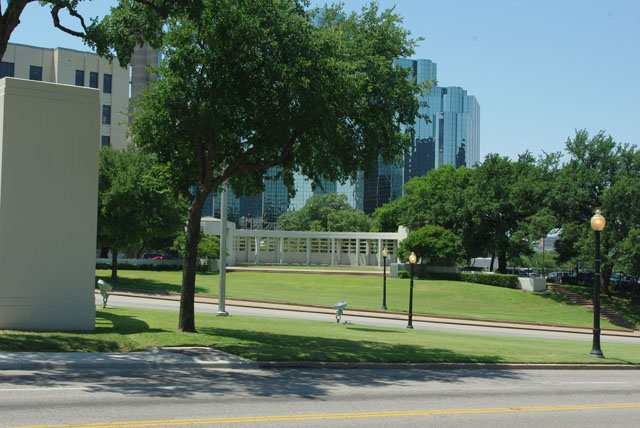
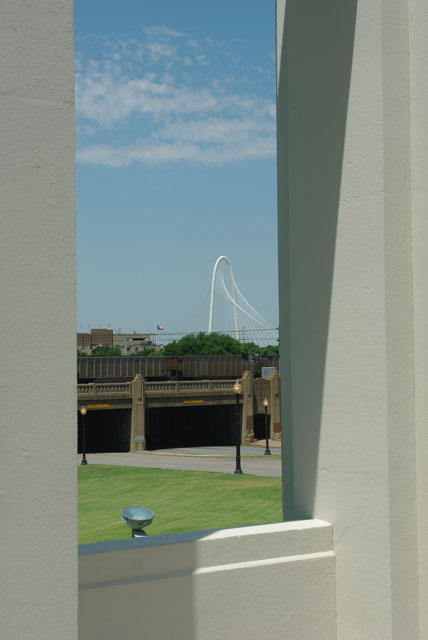
Margaret Hill Hunt Bridge

I recently visited the JFK Museum in Dallas. You are not allowed to take pictures inside the museum, but I took some outside. This shot was taken in the Dealy Plaza across the street from the museum. We are looking through a colonnade in the plaza at the new Margaret Hill Hunt Bridge, the first of three designed for Dallas by Santiago Calatrava. It is the only one completed at this time. The economy is going to have to improve significantly before the others can be built. Construction on the bridge began in spring 2007 with the steel being manufactured in an Italian steel factory often used by Calatrava to manufacture his designs. The bridge cost $93 million, its total length will be 1,870 feet (570 m) with a main-span of 1,197 feet (365 m), and an apex-height of 400 feet (122 m).

School Book Depository
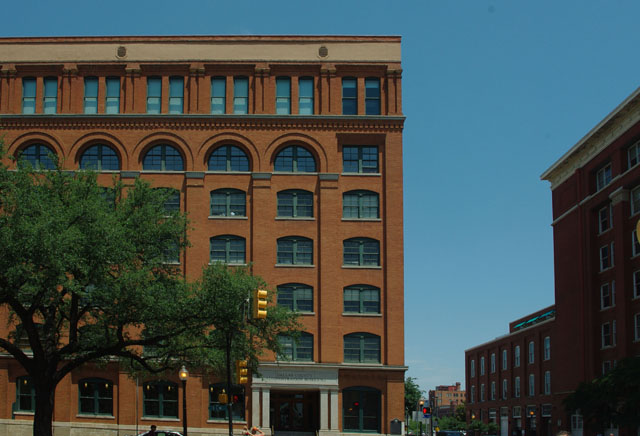
Texas School Book Depository

School Book Depository

The JFK Museum is located on the sixth and seventh floors of the old Texas School Book Depository. The main exhibit is located on the sixth floor; the seventh floor contains related art work. The sixth floor corner window (which appears to be open in the picture at the right) is the location from which Lee Harvey Oswald fired on the presidential motorcade killing President Kennedy. The museum contains exhibits outlining President Kennedy’s life, the assassination and its aftermath. There is also a film shown in the museum. I hadn’t visited it until a couple of years ago when my nephew, his son and a friend visited me.

The Grassy Knoll
The Grassy Knoll


Reconstruction and Preservation in Rome

Posted on August 23, 2011 by Canicus

Click on pictures for larger image.

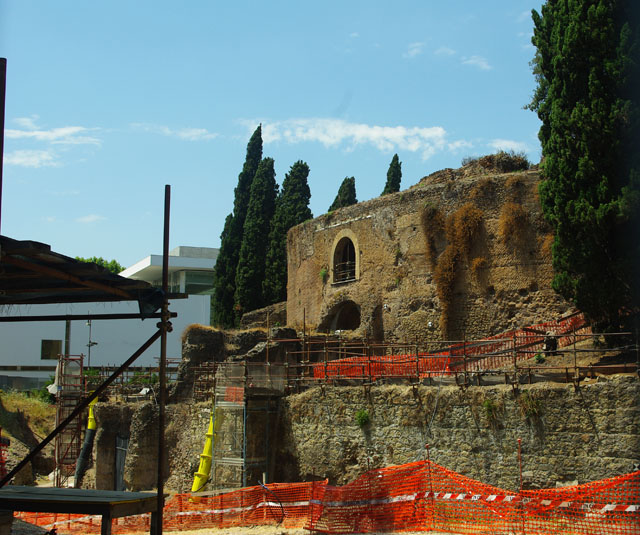
Augustus' Tomb
Preservation/Restoration of Augustus’ Tomb

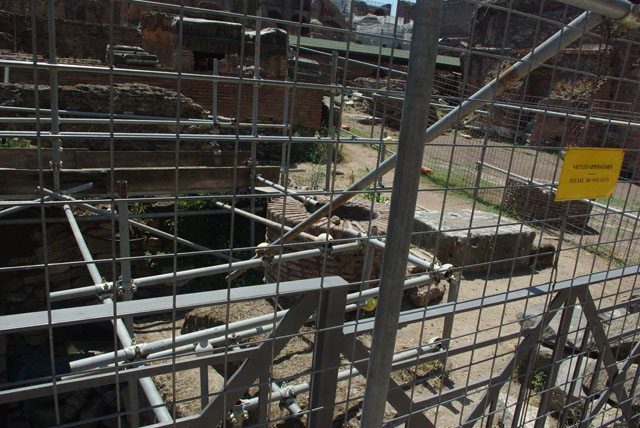
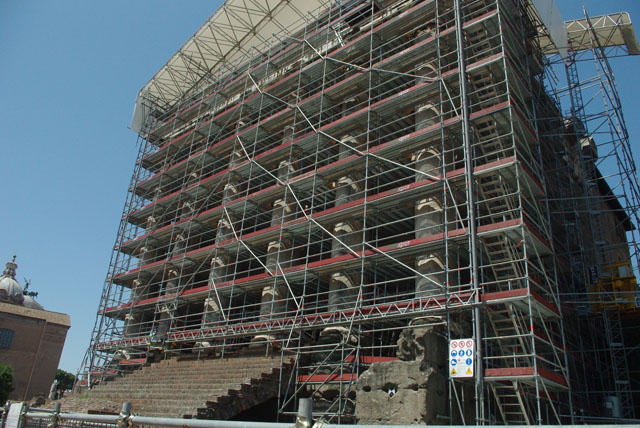
Italy may be experiencing huge financial problems, but they obviously are still investing in their economic future. Specifically, they are doing considerable work reconstructing and preserving ancient sites. These sites are huge tourist attractions bringing people from all over the world to see the glory that was once Rome.

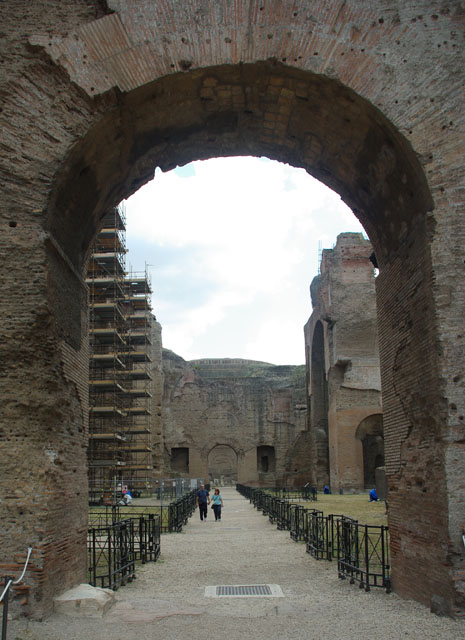
Caracalla's Bath
Preservation Work at Caracalla’s Bath

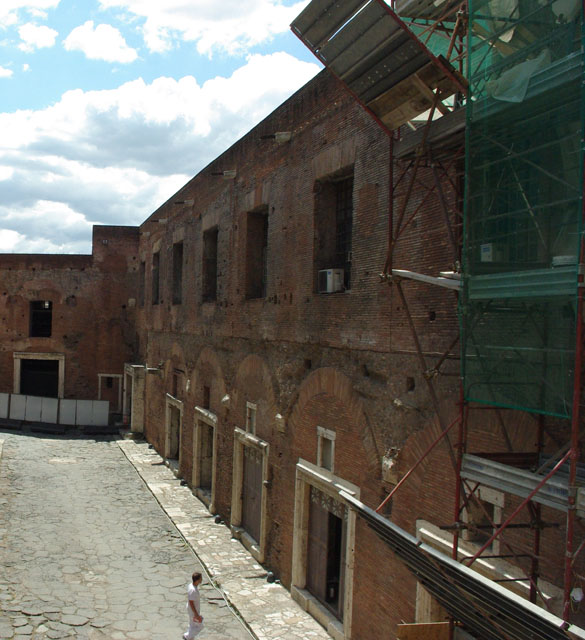
One sees three kinds of activities. First there are what appear to be reconstruction or restoration of some ancient buildings. That is, they appear to be attempting to restore some structures so as to appear as they did when they were still in use.

Forum Dig
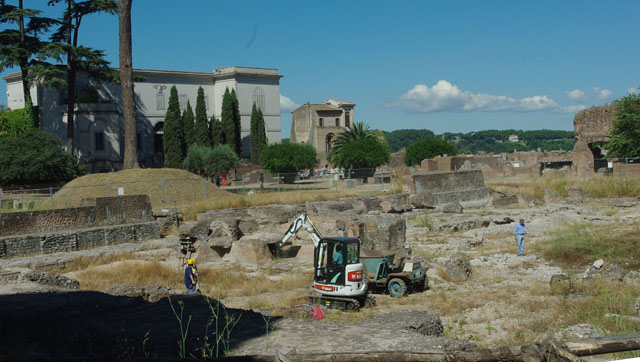
Archaeological Dig in the Forum

Second, there are more conservative efforts simply to prevent further deterioration of the site. One may argue as to which is preferable. Restoration does, of course, help the modern tourist to visualize what the building may have looked like centuries ago. On the other hand, it is simply impossible to restore the Forum, for example, to what it may have looked like at some previous time in history. The Forum was always changing in ancient times and to restore it to some particular point in time would lose ruins reflecting some other time.

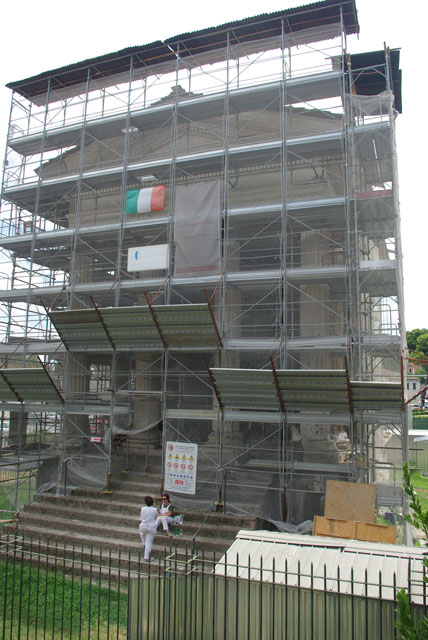
Temple of Antoninus and Faustina
Reconstruction of the Temple of Antoninus and Faustina

It is also highly unlikely that anyone would presume to  restore the Coliseum to its original state. So much of its iconic nature for the city of Rome involves the damage done over time–from earthquakes to vandalism. What is done at this site is preservation to prevent further deterioration.

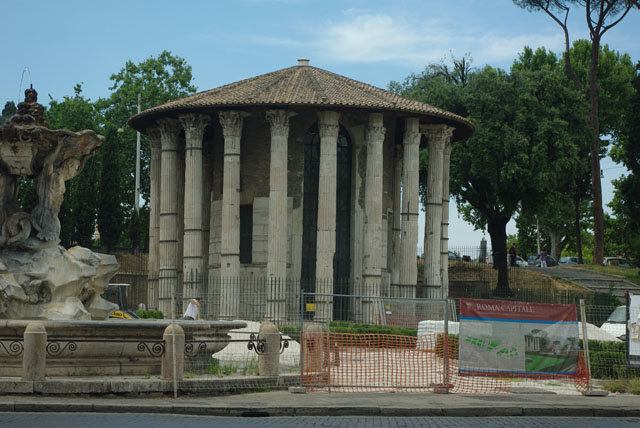
Temple of Hercules
Ground Work at the Temple of Hercules

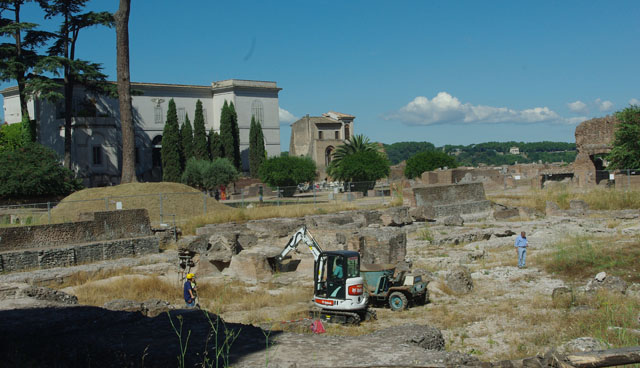
Third, there are archaeological efforts going on all over the city. Some of these seem to be rather careless–bulldozers on the Palatine. But others are more careful, reflecting the minute care of modern, scientific archaeological methods.

Preservation of the Restored Temple of Portunus
Palatine
Bulldozer on the Palatine
Trajan's Market
Reconstruction of Trajan’s Market


Layers of Rome

Originally posted on August 10, 2011 by Canicus

Click on pictures for larger image.

Romulean-Huts-1-M1-150x150
Romulean huts on the Palatine

 Rome has been inhabited for about 2,750 years. Ancient as well as modern authors disagree as to the exact year of Rome’s founding, but the archeological evidence is that it was an inhabited town as early as the eighth century B.C. There are few cities in the world that have been inhabited over a longer period of time. Athens comes to mind. Jerusalem might, had it not been leveled by Rome and briefly uninhabited in the second century A.D. after the Bar Kokhba revolt.

Trees tell their age by the rings formed in their trunks. We can tell something of climatic history by the characteristics of those rings. Ancient cities typically are built on layers, which reveal something of their histories. Rome is no exception. A tour bus guide commented that when the Bank of Italy building was constructed, significant archeological finds were found when the foundations were dug. The commentator went on to say that is true of any place in Rome.

Over the centuries Rome was reconstructed. The famous fire during Nero’s reign was just one of many. Some buildings collapsed, especially the tenements where most plebs lived. Several times the city was invaded which resulted in buildings being damaged. Roman emperors famously added new buildings on top of older buildings which were leveled to make way for the new. This has resulted in layers upon layers of foundations and partial walls. Earthquakes have collapsed all or parts of some structures—the Flavian Amphitheater (Coliseum) being a famous example. It was built on top of what had previously been part of the grounds of Nero’s Domus Aurea, which was on top of ruble left from the great fire during his reign.

It is hard for the visitor to imagine what various archeological sites—the Forum, the Palatine, Ostia etc.—might have looked like. What year are we talking about? Which layer of foundations is of interest. The Forum and the Palatine which Julius Caesar knew were not that which Augustus Caesar, who said he had found a city of brick but left a city of marble, left less than a century later. Neither resembled that which Constantine the Great found—or left.

Under-Forum-1-M3-150x150
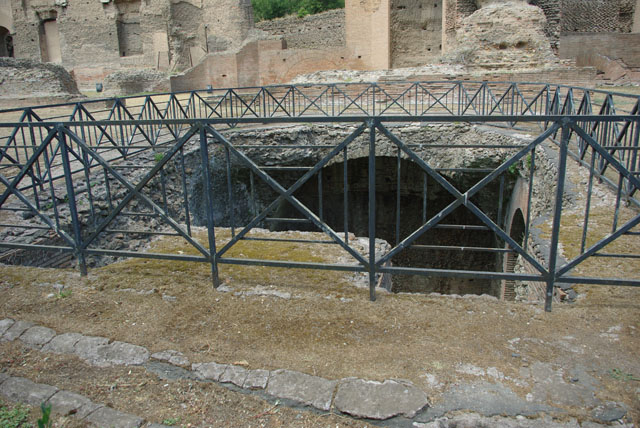
Under the Forum
Under-Palatine-1-M3-150x150
Under the Palatine

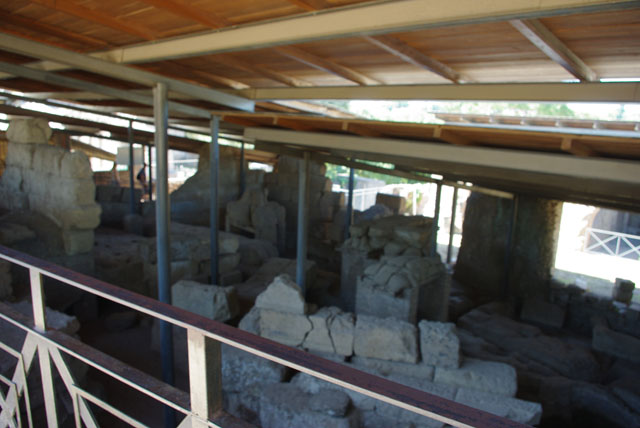
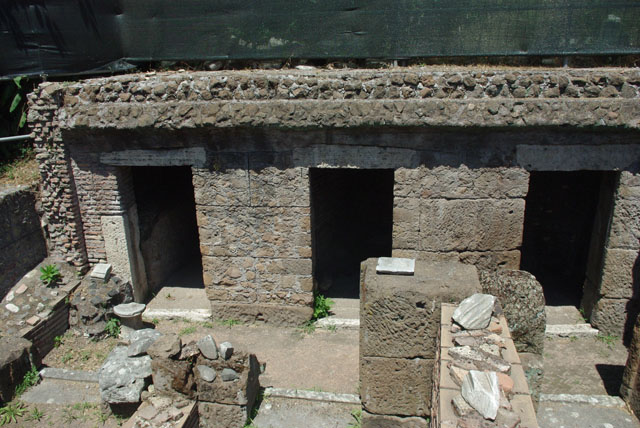
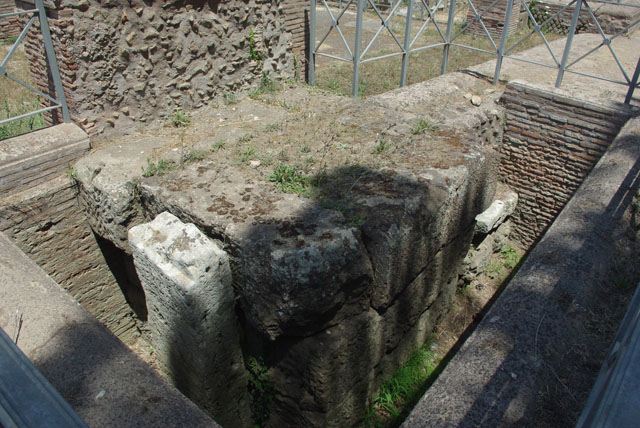
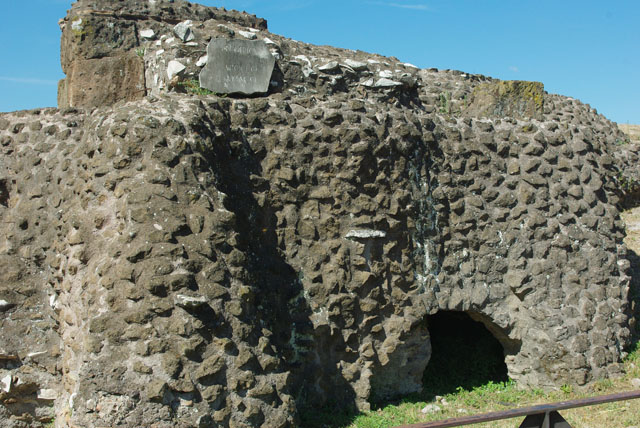
The visitor today sees evidence of this. Holes dug in the Forum, the Palatine and Ostia reveal structures below ground level upon which the structures we see today were built.

Under-Ostia-1-M1-150x150
Under Ostia
Buried-Palatine-Arch-1-M2-150x150
Partially buried arch on the Palatine

Similarly, here and there we see an arch—most of which is concealed below the current ground level.

Throughout the city we see archeological digs underway.


Palatine-Dig-1-M2-150x150
Archeological dig on the Palentine
Under-Forum-1-M3-150x150
Archeological dig on the Forum