Monthly Archives: August 2013

Canicus in Italia: Day 1 (Venice)

Originally posted on June 30, 2012 by Canicus

San Marcos Plaza

Today was my first day of touring in Venice. By the time I did my travelog and photo journal I was really too bushed – it was effectively a 30 hour day, from 6am Thursday Dallas time to 10pm Friday I was bushed I don’t really plan on doing anything the day I arrive. I slept until 9am and by the time I ate breakfast and got organized, it was 10am.

I got underway and caught the vaporetto to San Marcos plaza. Most European cities have a good system of public transportation. The vaporetto is Venice’s solution – a water bus system. You don’t drive in Venice. There are, as far as I know, no cars, trucks or buses in the city. Alternatives include water taxis and gondolas. Everything is very expensive in Venice – more than anyplace I’ve been in Europe. The vaporetto is the most economical. There seem to be two types: one is less expensive and very crowded and the other more expensive and less crowded, more comfortable and even air-conditioned. If your true love took you for a gondola ride be aware he spent a lot of money.

My ride to San Marcos was on the more expensive version of the vaporetto. While it is air-conditioned, I chose to sit outside aft so I could get some better pictures. While the absence of cars and trucks in Venice, eliminates some problem, motorized boats cause a problem – waves caused by motorized boats damage the foundations of buildings along the canals. I do have a picture of repairs being made. The wooden piles driven into bay are visible.

Apart from the canals and the buildings along the canals, the San Marcos plaza is the best know attraction in Venice. At the east end the Byzantine cathedral of San Marcos dominates the plaza. The other sides of the plaza are dominated by Renaissance government buildings. The plaza contains a famous tower. One of the buildings on the north side has an elaborate clock. The “robots” on the top of the structure that strike the bell seem to be inoperative. To the south side of the cathedral is the Ducal Palace.

San Marcos cathedral is sometimes called the “Robber Church.” Seems the Venetians decided the needed a more famous patron saint, so they had the remains of Saint Mark stolen from Alexandria and the cathedral was built to house the relics. Over the doors are murals depicting the robbery. But Saint Mark’s bones were not all that was stolen, so was some of the art work. Over the main entrance are four bronze horses which were stolen from the hippodrome at Constantinople.

The enforcement of the dress code into the cathedral is very strictly enforced. Even men wearing shorts were not admitted. Fortunately I saw what was going on before getting into line. I was wearing shorts. But apparently many men and women were standing in line waiting to be told they could not enter. I had planned to be properly dressed tomorrow to attend Mass in the church in the hopes that not only do I get in, but I can hear music performed in the incredible acoustics of the church favored by the antiphonal music of Palestrina. I did notice that photographs are not allowed, so probably there will be no picture of the interior tomorrow.

I visited the ducal palace next to the church. The “interesting parts” – the public meeting room and the ducal apartments are on the 3rd and 4th floors (American numbering) and I really didn’t feel up to climbing the golden stairs to see them.

There was an interesting exhibit of counterfeit money dating to ancient Greek and Roman counterfeits to the most recent. It showed what is involved in making real Euros, as well as counterfeits and plates. There were counterfeit coin dies. More modern “counterfeits” included bogus credit cards and ATM skimming hardware. There was a million dollar Federal Reserve Note; there is no such “real” thing. It has a picture of George Washington.

Canicus Modius


Canicus in Europa: Day 0.5 (28-29 June 2012)

Originally posted on June 29, 2012 by Canicus

From Dallas to Venice

There are actually seven days marked on my calendar as “transfer.” 28-29 June are the first two. Up at 5am in Dallas to catch a 7am SuperShuttle ride to DFW. While waiting for my US Airways plane to Philadelphia, CNN reported that the Supreme Court had overturned the “individual mandate.” Apparently, they didn’t read carefully because soon they were reporting a “correction” – the court had upheld the Patient Protection and Affordable Care Act in its entirety.

This is the first time I’ve flown US Airways. So I don’t know if this is now universal, but they are charging extra for all sorts of stuff: to watch the dumb movies, to have earphones to listen to the dumb movies, meals on domestic flights, wine on all flights…. Transferred to a flight to Rome at Philadelphia. Arrived at Funicino at 9am. I don’t remember Rome being so humid last year. Why is it that my bags are always the last to be put on the carrousel? It was easy to get from British Airways to the Leonardo Express; not so from U.S. Airways. No one seemed to know where the train station was; and all the up escalators seemed to be down.

I eventually got to Rome Termini railroad station in plenty of time to grab a bite to eat and catch the train to Bologna. Trains in Europe are a great way to get around. For most of this leg of the trip I nearly had a car to myself. But at the last stop before Bologna it filled up. At Bologna I had the worst experience with EuRail ever. I had a half hour to make the transfer to the train to Venice. But they did not announce the platform where the train was leaving until 5 minutes before it departed. And, as it turned out, I was about as far from the platform as possible. I got to the platform about a minute before it departed, but I was at coach 5 (and my coach was coach 2). So I battled my way through coaches 5, 4 and 3 with my luggage, only to find coach 2 packed (so nowhere to stash baggage) and someone in my reserved seat. They did move.

Anyway, I’ve arrived in Venice, where it does seem a bit cooler. I’ve checked into my hotel a short walk from the train station. I had a light supper. And am filing my first travelogue to the blog.

For photos, visit the photo slideshow

Canicus Modius

Venice, Italy

29 June 2o12


JFK Museum in Dallas

Posted on June 3, 2012 by Canicus

JFK Museum in Dallas
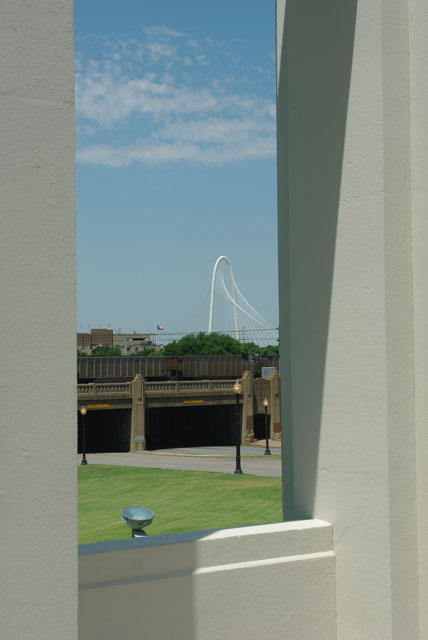
Margaret Hill Hunt Bridge

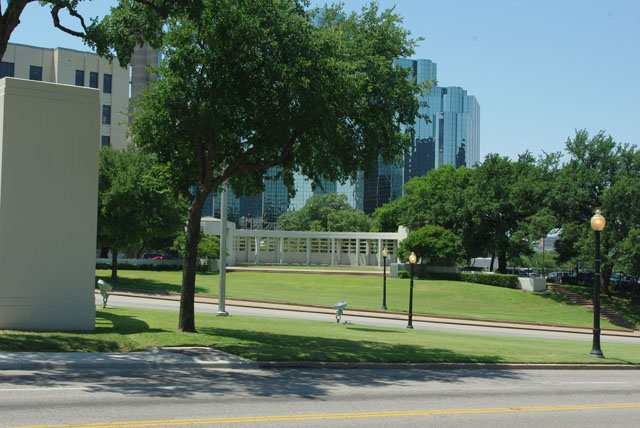
I recently visited the JFK Museum in Dallas. You are not allowed to take pictures inside the museum, but I took some outside. This shot was taken in the Dealy Plaza across the street from the museum. We are looking through a colonnade in the plaza at the new Margaret Hill Hunt Bridge, the first of three designed for Dallas by Santiago Calatrava. It is the only one completed at this time. The economy is going to have to improve significantly before the others can be built. Construction on the bridge began in spring 2007 with the steel being manufactured in an Italian steel factory often used by Calatrava to manufacture his designs. The bridge cost $93 million, its total length will be 1,870 feet (570 m) with a main-span of 1,197 feet (365 m), and an apex-height of 400 feet (122 m).

School Book Depository
Texas School Book Depository

School Book Depository

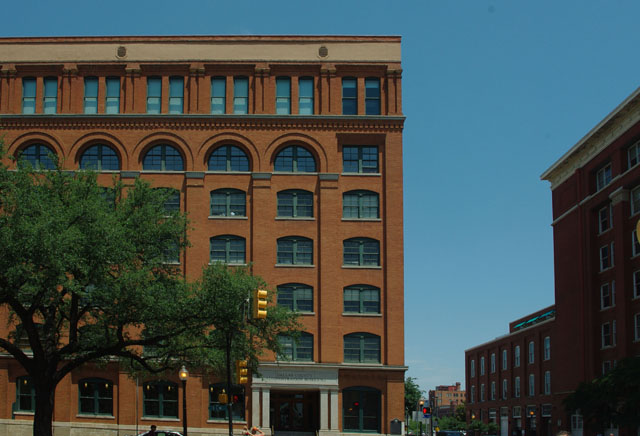
The JFK Museum is located on the sixth and seventh floors of the old Texas School Book Depository. The main exhibit is located on the sixth floor; the seventh floor contains related art work. The sixth floor corner window (which appears to be open in the picture at the right) is the location from which Lee Harvey Oswald fired on the presidential motorcade killing President Kennedy. The museum contains exhibits outlining President Kennedy’s life, the assassination and its aftermath. There is also a film shown in the museum. I hadn’t visited it until a couple of years ago when my nephew, his son and a friend visited me.

The Grassy Knoll
The Grassy Knoll


Reconstruction and Preservation in Rome

Posted on August 23, 2011 by Canicus

Click on pictures for larger image.

Augustus' Tomb
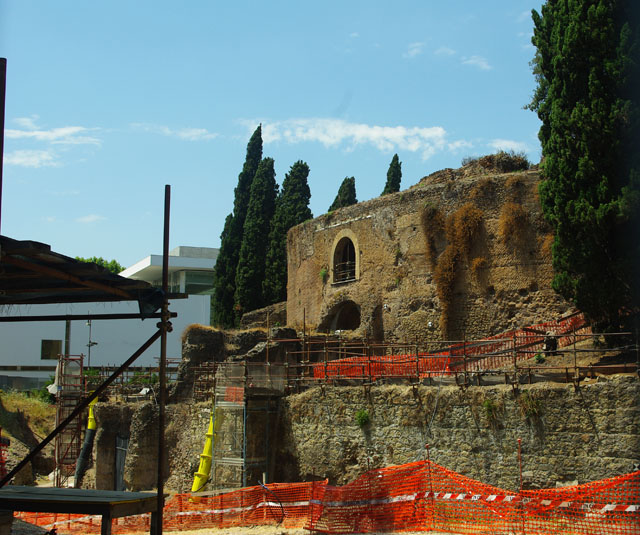
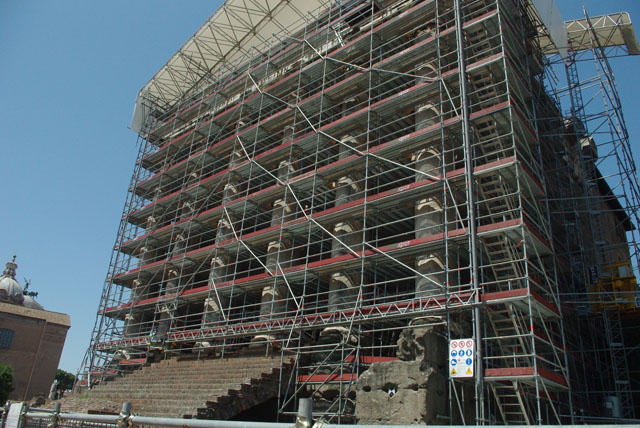
Preservation/Restoration of Augustus’ Tomb

Italy may be experiencing huge financial problems, but they obviously are still investing in their economic future. Specifically, they are doing considerable work reconstructing and preserving ancient sites. These sites are huge tourist attractions bringing people from all over the world to see the glory that was once Rome.

Caracalla's Bath
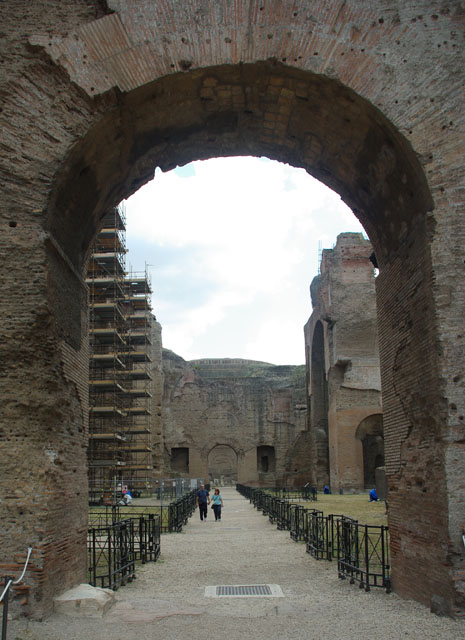
Preservation Work at Caracalla’s Bath

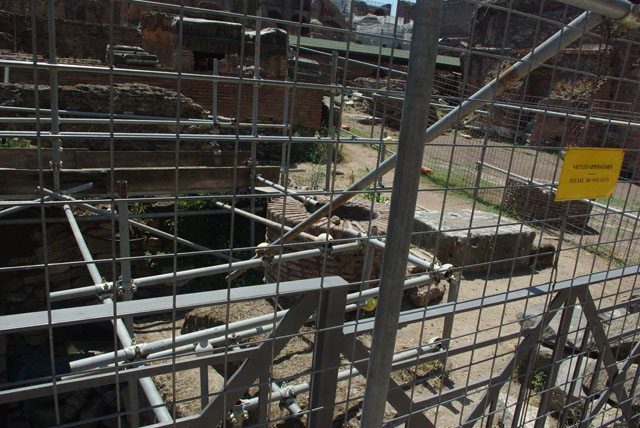
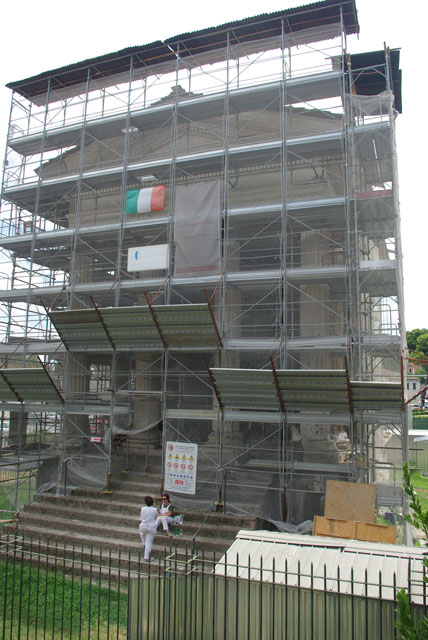
One sees three kinds of activities. First there are what appear to be reconstruction or restoration of some ancient buildings. That is, they appear to be attempting to restore some structures so as to appear as they did when they were still in use.

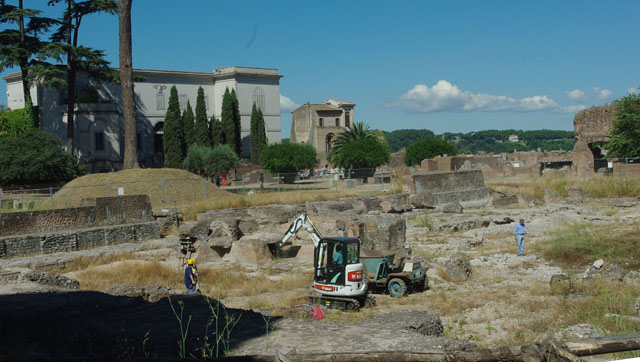
Forum Dig
Archaeological Dig in the Forum

Second, there are more conservative efforts simply to prevent further deterioration of the site. One may argue as to which is preferable. Restoration does, of course, help the modern tourist to visualize what the building may have looked like centuries ago. On the other hand, it is simply impossible to restore the Forum, for example, to what it may have looked like at some previous time in history. The Forum was always changing in ancient times and to restore it to some particular point in time would lose ruins reflecting some other time.

Temple of Antoninus and Faustina
Reconstruction of the Temple of Antoninus and Faustina

It is also highly unlikely that anyone would presume to  restore the Coliseum to its original state. So much of its iconic nature for the city of Rome involves the damage done over time–from earthquakes to vandalism. What is done at this site is preservation to prevent further deterioration.

Temple of Hercules
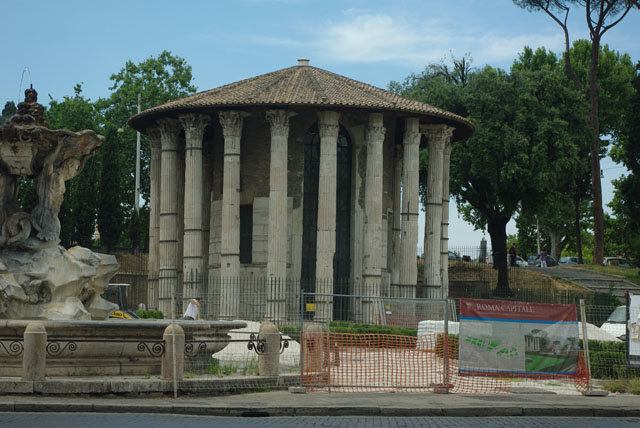
Ground Work at the Temple of Hercules

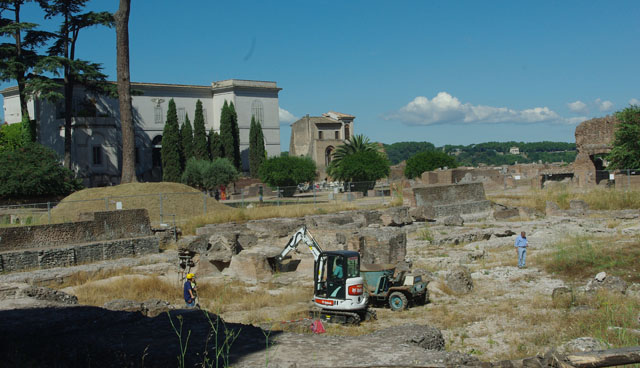
Third, there are archaeological efforts going on all over the city. Some of these seem to be rather careless–bulldozers on the Palatine. But others are more careful, reflecting the minute care of modern, scientific archaeological methods.

Preservation of the Restored Temple of Portunus
Palatine
Bulldozer on the Palatine
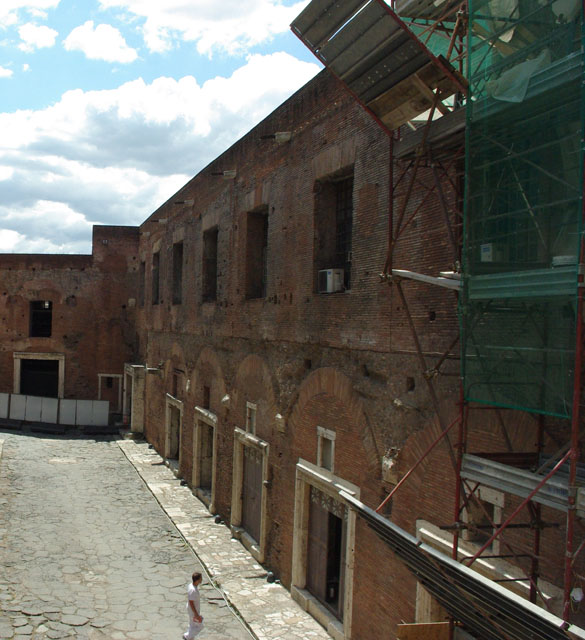
Trajan's Market
Reconstruction of Trajan’s Market


Layers of Rome

Originally posted on August 10, 2011 by Canicus

Click on pictures for larger image.

Romulean-Huts-1-M1-150x150
Romulean huts on the Palatine

 Rome has been inhabited for about 2,750 years. Ancient as well as modern authors disagree as to the exact year of Rome’s founding, but the archeological evidence is that it was an inhabited town as early as the eighth century B.C. There are few cities in the world that have been inhabited over a longer period of time. Athens comes to mind. Jerusalem might, had it not been leveled by Rome and briefly uninhabited in the second century A.D. after the Bar Kokhba revolt.

Trees tell their age by the rings formed in their trunks. We can tell something of climatic history by the characteristics of those rings. Ancient cities typically are built on layers, which reveal something of their histories. Rome is no exception. A tour bus guide commented that when the Bank of Italy building was constructed, significant archeological finds were found when the foundations were dug. The commentator went on to say that is true of any place in Rome.

Over the centuries Rome was reconstructed. The famous fire during Nero’s reign was just one of many. Some buildings collapsed, especially the tenements where most plebs lived. Several times the city was invaded which resulted in buildings being damaged. Roman emperors famously added new buildings on top of older buildings which were leveled to make way for the new. This has resulted in layers upon layers of foundations and partial walls. Earthquakes have collapsed all or parts of some structures—the Flavian Amphitheater (Coliseum) being a famous example. It was built on top of what had previously been part of the grounds of Nero’s Domus Aurea, which was on top of ruble left from the great fire during his reign.

It is hard for the visitor to imagine what various archeological sites—the Forum, the Palatine, Ostia etc.—might have looked like. What year are we talking about? Which layer of foundations is of interest. The Forum and the Palatine which Julius Caesar knew were not that which Augustus Caesar, who said he had found a city of brick but left a city of marble, left less than a century later. Neither resembled that which Constantine the Great found—or left.

Under-Forum-1-M3-150x150
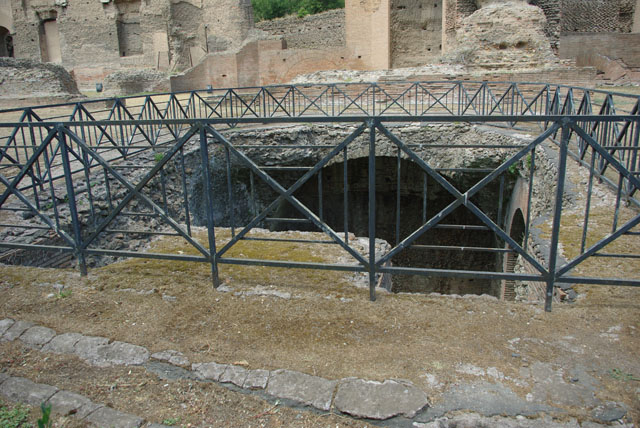
Under the Forum
Under-Palatine-1-M3-150x150
Under the Palatine

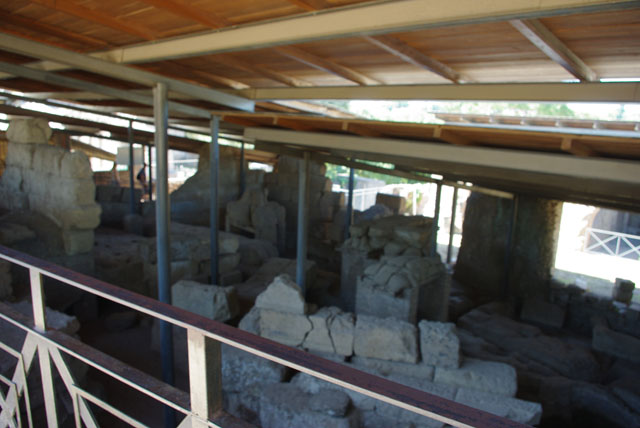
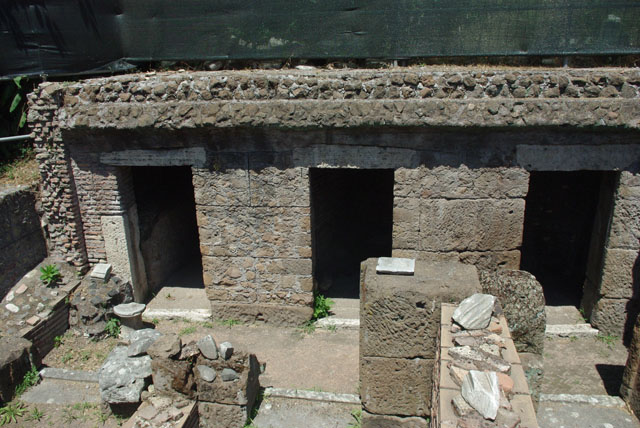
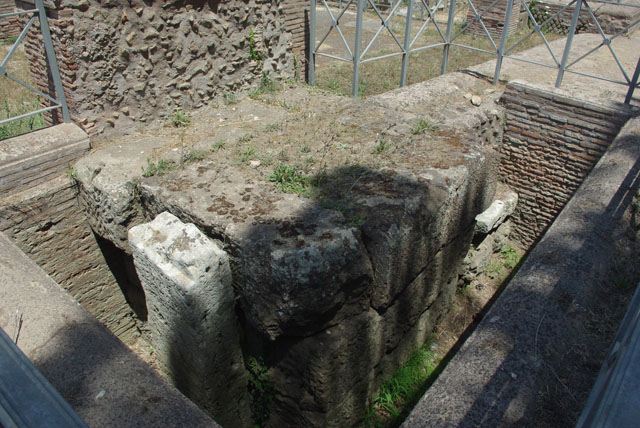
The visitor today sees evidence of this. Holes dug in the Forum, the Palatine and Ostia reveal structures below ground level upon which the structures we see today were built.

Under-Ostia-1-M1-150x150
Under Ostia
Buried-Palatine-Arch-1-M2-150x150
Partially buried arch on the Palatine

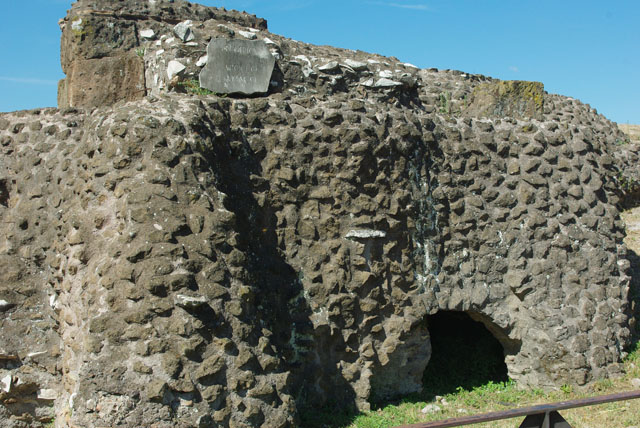
Similarly, here and there we see an arch—most of which is concealed below the current ground level.

Throughout the city we see archeological digs underway.


Palatine-Dig-1-M2-150x150
Archeological dig on the Palentine
Under-Forum-1-M3-150x150
Archeological dig on the Forum


Canicus in Italia: Day 19 (26 July 2011)

Originally posted on July 28, 2011 by Canicus

Today is the last “full day” in Rome.

I went to the post office to mail some of the tour books I brought with me. The idea was to lighten the load somewhat to account for the things I picked up while here which included four rather heavy books. The post office is within walking distance of my hotel. In some respects it is rather like ours, but in others not. They have a shop that not only sells mailers and mailing supplies, but a variety of things (like children’s books, spiral notebooks, etc.) that are totally unrelated to mail services. I had picked up some mailers earlier, put the books in them and addressed them to myself.

Some of the significant differences between the Italian post office and American. First it is divided into two sections. One section has to do with paying bills, money orders and that sort of thing. The other is the mail service—letters, packages and the like. In either section you take a number from a machine that has a letter and a number. The letter indicates what service you require; the number is a queue number. They provide some chairs while you wait for your number to come up, although there were more people waiting than chairs. When my “P07” came up the lady realized that it was going to cost me nearly 100 euros to mail the books in the mailers—three times what it would cost in a box costing a couple of euros. So I bought the box. The lady then proceeded to pack the box for me, seal it up with tape and address it for me! I really can’t imagine that happening in the U.S. Obviously, Italy is one of those evil, socialist countries plagued with inefficient bureaucrats.

The next task was to pack my suitcase and backpack with everything for the return trip, as I realized I was going to have to leave the hotel  not later than 5:15 AM Leonardo Express out of Termini to Fiumicino Airport.

I puttered around, had lunch and supper. Then in the evening I finally got in line to buy the train ticket to the Airport. As I mentioned, the lines at Termini ticket counters are huge. It took an hour standing in line to get the ticket. And the line was short compared to what I saw most of the time. Then, with ticket in hand, I set the laptop on top of the packed bag to write the final travelogue from Rome, slip the laptop in to the backpack and get to bed early.

Obviously I have given up trying to get these posted. The internet in the hotel is too much of a hassle. I’ll post the last few when get home. I’ll also attempt to update the photo logs.

Canicus non in Italia: Day 20 (27 July 2011)

Originally posted on July 28, 2011 by Canicus

At 5:30 AM I saw Termini virtually deserted–very few people anywhere around and everything pretty much closed down. It was a 15 minute walk from my hotel to binaria 27 (the hotel is near binaria 1), where the Leonard Express was waiting for passengers—although the doors to the train were locked and the lights off. Coming into Rome twenty days ago that train was packed. But there were only a few dozen of us leaving at this hour. The train ride was pleasant as it was just getting light so I could see some of the countryside. It seemed almost as dry as Texas.

At the airport, I really had no idea where to go. I’ve never successfully managed to do boarding passes online. I’m not sure why that is, except that this time I would have had no way to actually print out the passes. I did finally locate the British Airways check-in counter. But even at that early hour, they had a long line—I suspect most of us destined to fly the 8:20 AM flight to London. It took an hour to get through that line, check my bag and get the boarding passes—although I was not assigned a seat on the London to Dallas flight. And, of course, I still had to go through airport security. Italian airport security didn’t seem as tight as that in Britain and the U.S. (Incidentally, U.S. TSA had opened my bags—my guess being that I had spare batteries for cameras, etc. and some chargers which prompted an inspection.

The flight was uneventful. British Airways did provide an envelope for the boarding passes that had instruction on what to do when I reached Heathrow. That was helpful because I had to get a seat assignment (actually a whole new boarding pass), go through security again, travel from one T1 to T5 (which involved another train ride) and then to gate C63 which, as you might guess was about as far away from the train stop as possible. I did manage to navigate with a few minutes to spare before they started loading. I was a bit concerned that my boarding pass said “INVOL UPGRADE DUE OVERSALES.” But as it turned out, that meant I had been assigned a “deluxe” seat instead of back with the peons in economy. The flight back to Dallas was uneventful.  Although it departed London at 11:40 AM and arrived in Dallas a bit after 3 PM, it was a 9+ hour flight due to the time zones.

So in Dallas, I passed through immigration quickly with my temporary passport and proceeded the long walk to the baggage area to get my suitcase.  Customs was in the middle of the baggage area. But apparently they were expecting a huge crowd. They had those roped of queue thingies four deep running the whole length back and forth from  one end of the area to the other—maybe 100 yards or so all told. But the actual line was only about 50 yards long—you had to walk 350 yards just to get to the end of the line. The result was that some folks were cutting under the ropes and, in effect, cutting into line ahead of those of us who walked the walk. One I got into line the process went quickly. I didn’t have any British cow dung on my sandals, so it was no problem.

Then a taxi ride home—apart from the airplane tickets, the most expensive travel of the whole trip.

I do speculate as to why there is so much going up (either climbing or with the aid of escalators and elevators) in order to go back down and so much going down in order to go up. Metro stations and airports seem to operate on that philosophy.

When I got home I turned on my main computer only to discover that it was 104° in Dallas and Addison. It was only 102° on my cool patio. I had turned the air-conditioning up (or is it down?) to 90 to save on electricity while gone.

Canicus in Italia: Day 18 ( 25 July 2011)

Originally posted on July 28, 2011 by Canicus

This was the penultimate day of my visit. I revisited the “core sites.” First I managed to climb to the summit of the Palatine Hill, where the optimi maximi dwelt in the glory days of Rome.

I located what the signs referred to as “Romulan huts.” They looked rather too substantial to my eyes to be huts although they were circular as the earliest dwellings of Rome would have been. I also found the house of Augustus Caesar to which three “cubicles” are open to the public with mosaics and, in one, evidence of the ceilings. According to historians, this house on the Palatine was “modest” in keeping with the image the Princep (first citizen) wished to convey rather than that of king. His numerous villas outside of Rome were not so modest.

Adjacent to this house was that of Livia–his third and longest wife whom he apparently actually did love. She is also the mother of his stepson, Tiberius who was Emperor after him and ruled during Jesus’ adult life. Her house was more lavish and larger than that of Caesar Augustus. Unfortunately there is no public access to this house. Supposedly visitors can view some of the rooms through windows–which were unfortunately filthy.

There is a spectacular view of the Forum from the Palatine Hill–which is probably why it was a site for the “greatest and best” of Rome’s elite.

I descended the hill into the Coliseum for a second visit, primarily because I had decided I wanted to waste 15 euros on five badly executed imitations of Roman coins apparently fabricated in Great Britain. The main attraction was the Aureus of Claudius–a gold coin (although I’m positive this thing is most likely plastic). Aurei of the imperial period sell for ten thousand dollars and up. There is also a denarius of Caesar Augustus. I have a better, genuine example in my collection worth several hundred dollars. I wonder why the “counterfeiters” didn’t, at least, choose a better example! They say you can tell counterfeit Confederate dollars because they are better than those printed by the Confederacy.

From the Coliseum I took a different route to the Forum–one which took me behind the Trajan Forum. Unfortunately the site behind Trajan’s market was closed. There is much restoration going on there and elsewhere in Rome. You see much of that, as well as archeologists at work, in Rome. Italy may have a national debt that exceeds its GNP, but it is investing in tourism.

I also found a map of the area at a free museum which does the best job I’ve seen of pinpointing the locations of ancient sites. With that I revisited the Forum and spotted things I had previously missed–such as the house of the Vestal Virgins. They were not at home, however.

Picked up a newspaper on the way to the hotel. Seems Cadel Evans, an Australian, has become the first of that country to have won the Tour de France, with the Schleck brothers becoming the first brothers to share the podium in Paris.

Otherwise the world goes on as before. Mass murders in Norway, troubles in the Middle East, media scandals and Congressional Republicans acting like idiots to bring about another Great Depression worldwide.


Canicus in Italia: Day 17 (24 July 2011)

Originally posted on July 28, 2011 by Canicus

I took a tour bus that takes a different route on Sundays. From the bus I got a few shots of the backside of Trajan’s market. This part was located on the top of the hill above and beyond the curved structure that holds the hill up. Supposedly it was a food market.

I also spotted something that looked like it might be the Arch of the Money Changers near the Forum Borium. One of the problems of most of the maps are they are not very precise about the locations of some things.

I got off the bus at the Circus Maximus stop. This is the race track that is located between the Palatine and Aventine hills. The imperial palace overlooks the track. The track is 600 meters long (roughly the length of 6 football fields if you include the end zones and 150 meter wide. In imperial days there were bleachers along the track that could accommodate tens of thousands of spectators. The emperors had a prime box at the finish line that could be accessed directly from the palace on the Palatine. The bleachers are gone. You can see the track and where the spine that ran down the middle of the track ran. Archeologists say that the foundations of the spine are still under the mound of grass.

I then went to Santa Maria della Comenia, an old church used by the Eastern Rite Catholics. I had been there earlier, but all my pictures that day were black and white. After Mass I was able to get decent color pictures and to go down into the crypt below the sanctuary. That will have to count as my visit to the “catacombs.” The church is located where at one time the grain dole was distributed and, when Christianized, the scene of the diaconal care for the poor.

Partly cloudy today in Rome, but no rain. Tomorrow I think I will try one more assault to reach the top of the Palatine. Supposedly Caesar Augustus’ modest house and Livia’s more expansive villa are interesting sites.